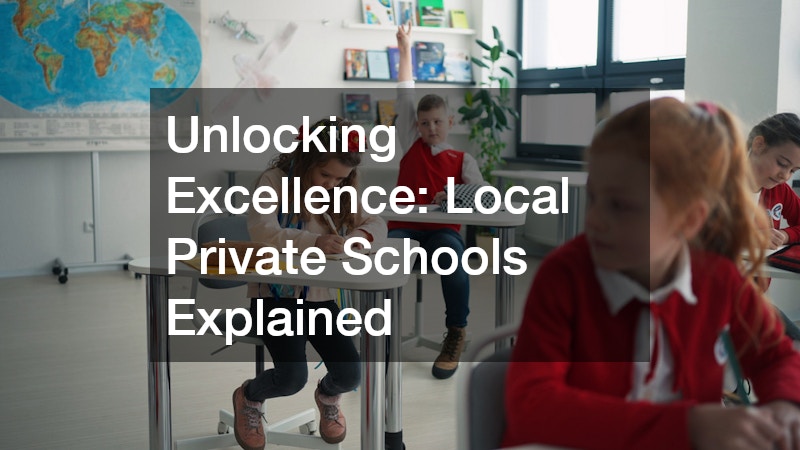

Local private schools stand apart from public institutions primarily through their operational autonomy, specialized curricula, and lower student-to-teacher ratios. Because they operate independently of state educational funding, private institutions have the freedom to design innovative learning frameworks that cater to specific educational philosophies, religious traditions, or pedagogical methods. This flexibility allows educators to adapt quickly to modern educational trends, integration of cutting-edge technology, and specialized academic tracks. Furthermore, smaller class sizes ensure that educators can provide personalized attention, identifying each student’s unique strengths and areas for growth early in their academic journey. Parents searching for tailored learning pathways often turn to local private schools to secure an environment where academic standards match their family’s personal values and expectations.
How Do Private Institutions Foster Academic and Personal Growth?
Private educational institutions emphasize holistic development by pairing rigorous academic standards with character formation, leadership opportunities, and robust extracurricular offerings. Beyond traditional subjects, students are frequently exposed to specialized instruction in foreign languages, fine arts, advanced STEM coursework, and community service projects.
This comprehensive approach cultivates critical thinking, resilience, and emotional intelligence alongside scholastic achievement. According to data published by the National Center for Education Statistics (NCES), private school students consistently achieve higher average scores on standardized tests and college entrance exams compared to national averages. By fostering a culture of high expectations and accountability within a supportive setting, these institutions equip students with the self-discipline and confidence required to excel in complex academic environments and future professional careers.
What Key Benefits Do Small Class Sizes Offer Students?
Small class sizes represent one of the most substantial advantages offered by independent schooling. When teachers manage fewer students per classroom, the learning dynamics change fundamentally, shifting from passive lecture delivery to active, participatory discourse.
-
Enhanced Individualized Attention: Teachers can tailor lesson plans to accommodate diverse learning speeds, ensuring advanced students remain challenged while providing prompt support for those needing extra assistance.
-
Increased Classroom Participation: In smaller settings, students feel significantly more comfortable contributing to discussions, asking questions, and taking intellectual risks without fear of peer judgment.
-
Deeper Educator-Student Relationships: Teachers develop a comprehensive understanding of each student’s personality, learning style, and academic trajectory, enabling more effective mentorship.
-
Improved Classroom Management: Reduced class sizes minimize behavioral disruptions, allowing educators to dedicate the vast majority of instructional time to active learning and engagement.
Why Is Community and Parental Involvement Vital in Private Education?
A defining characteristic of private education is the vibrant, close-knit community built around shared values, educational goals, and mutual accountability. Independent schools actively invite parental involvement, creating a collaborative partnership between the home and the classroom that directly enhances the student experience. Parents participate through active parent-teacher associations, volunteer initiatives, school board governance, and philanthropic endeavors. This strong sense of community provides students with a secure network of support where teachers, administrators, and parents communicate regularly regarding academic progress and personal well-being. Selecting among top local private schoolsmeans joining a supportive network where families and educators work together to foster a positive, nurturing environment conducive to long-term success.
How Should Families Evaluate and Select the Right Private School?
Selecting the ideal educational environment requires a structured evaluation process centered on your child’s specific academic needs, personality, and future goals. Families should begin by researching accredited institutions, reviewing academic outcomes, and visiting campuses to observe classroom dynamics firsthand.
-
Academic Alignment: Assess whether the school’s curriculum—whether International Baccalaureate, Advanced Placement, Montessori, or classical—matches your child’s learning style.
-
Faculty Credentials & Stability: Look into the qualifications, continuous professional development, and retention rates of the teaching staff.
-
Extracurricular Opportunities: Evaluate the breadth of offerings in athletics, arts, technology, and clubs to ensure well-rounded student engagement.
-
Tuition and Financial Assistance: Examine the full cost of attendance alongside available merit scholarships, need-based financial aid, or state tuition grant options.
-
Culture and Safety Standards: Gauge the school culture during open houses and private tours to verify that the environment is welcoming, safe, and aligned with family values.
To review official accreditation standards and school profiles, parents can consult resources provided by the Council for American Private Education (CAPE).
What Role Do Private Schools Play in College Preparation?
Private secondary schools excel at preparing students for the academic rigor and independence required at the university level. Through specialized college counseling programs starting as early as freshman year, students receive individualized guidance on course selection, test preparation, essay writing, and college application strategies. Guidance counselors in private settings maintain lower student caseloads, allowing them to write detailed, personalized recommendation letters and provide dedicated support throughout the admissions journey. Furthermore, rigorous coursework—such as Honors, AP, and IB programs—builds college-level research, analytical, and time-management skills. Insights provided by the National Association of Independent Schools (NAIS) highlight that private school graduates matriculate into four-year higher education institutions at exceptionally high rates, often transitioning seamlessly into challenging undergraduate degree programs.
Navigating the landscape of primary and secondary education is one of the most consequential decisions a family can make. Private schools offer a unique combination of academic rigor, personalized instruction, vibrant community involvement, and holistic character development. By maintaining smaller class sizes and flexible, high-caliber curricula, these institutions empower students to discover their passions, master complex skills, and build lifelong confidence. Whether your priority is specialized STEM education, fine arts immersion, faith-based values, or comprehensive college preparation, evaluating local private educational options provides a clear roadmap toward unlocking your child’s full potential. Investing in a supportive, high-achieving learning environment today sets the foundation for a lifetime of intellectual curiosity, personal integrity, and professional achievement.