
Private preschools excel in early learning by combining low student-to-teacher ratios, highly flexible curricula, and dedicated developmental resources that adapt to a child’s unique pace. During the foundational years from birth to age five, a child’s brain undergoes its most rapid structural growth. Private institutions capitalize on this critical neurodevelopmental window by designing low-density environments where educators can closely monitor and nurture individual progress. Unlike public programs that are often bound by rigid state standards, private centers possess the autonomy to implement evidence-based teaching techniques tailored to diverse learning styles. Choosing a private preschool for early childhood ensures that a child receives constant, targeted interaction, which drastically accelerates both language acquisition and executive functioning.
Furthermore, private early learning environments prioritize a holistic approach to childhood development. These institutions invest heavily in sensory-rich classrooms, specialized learning materials, and certified staff trained to spot cognitive and behavioral breakthroughs early.
By integrating structured play with intentional academic concepts, private preschools establish an atmosphere where curiosity turns into organic skill mastery. Research from the National Association for the Education of Young Children (NAEYC) emphasizes that high-quality learning environments with intentional adult-child interactions lay the necessary groundwork for lifelong educational achievement and emotional well-being. This structural commitment to early development sets a strong baseline for elementary school and beyond.
How do specialized curricula elevate a child’s cognitive development?
Specialized curricula accelerate cognitive development by replacing standard rote learning with immersive, inquiry-based frameworks like Montessori, Reggio Emilia, or language-immersion programs. Private institutions have the operational freedom to adopt these pedagogical philosophies, which encourage children to explore concepts through hands-on discovery and creative problem-solving. Rather than forcing young learners into uniform milestones, these frameworks empower children to direct aspects of their learning, building critical thinking and deep comprehension naturally. A private preschool for early childhood leverages these specialized methodologies to build early spatial reasoning, pre-literacy skills, and numerical confidence without causing cognitive overload or unnecessary academic stress.
The long-term cognitive impacts of specialized early childhood frameworks are well-documented by educational researchers. According to extensive analysis published by the National Institute for Early Education Research (NIEER), high-quality preschool programs that utilize intentional, research-backed curricula produce substantial, lasting gains in math, language, and social-emotional abilities. Private preschools refine these benefits by maintaining small class groups where teachers act as facilitators, guiding children through complex tasks while letting them experiment independently. This tailored instruction helps kids internalize foundational concepts much faster than they would in large, standardized group settings.
What specific structural advantages do private preschools offer?
Private early learning centers maintain key structural advantages that directly influence classroom safety, student engagement, and educational outcomes. These factors include:
-
Lower Student-to-Teacher Ratios: Smaller class sizes ensure every child receives personal attention, preventing quieter students from being overlooked while addressing behavioral needs immediately.
-
Advanced Classroom Infrastructure: Classrooms are systematically organized with age-appropriate STEM manipulatives, expressive art stations, and dedicated sensory zones that encourage interactive exploration.
-
Curricular Flexibility: Teachers can adjust daily lesson plans on the fly to spend more time on topics that spark intense interest or provide extra support where a child struggles.
-
Dedicated Enrichment Facilities: On-site access to specialized spaces—such as child-friendly science labs, music rooms, and indoor movement studios—broadens exposure to diverse disciplines.
-
Enhanced Safety Protocols: Private campuses frequently employ secure access controls, dedicated health staff, and rigorous cleanliness standards to maintain a safe learning space.
By combining these structural assets, private preschools construct an environment specifically engineered to help young children thrive across every developmental milestone.
How do small class sizes foster stronger social and emotional skills?
Small class sizes foster social and emotional growth by creating a secure, tight-knit environment where children feel comfortable expressing themselves and navigating peer interactions. In a classroom with fewer students, educators can proactively guide conflict resolution, model empathy, and help children identify and regulate their emotions. Rather than stepping in only when disruptions occur, teachers in small classes closely observe social dynamics and offer immediate, gentle guidance. This continuous support helps young learners build emotional resilience, self-control, and cooperative play habits that serve as the foundation for positive social interactions later in life.
Additionally, small group dynamics significantly boost a child’s confidence and willingness to communicate. Young children are far less likely to feel overwhelmed by loud, crowded settings when they operate in small, familiar groups. This comfortable dynamic gives hesitant or shy children the space to speak up, share ideas, and step into leadership roles during group activities. Comprehensive early childhood research compiled by the U.S. Department of Health and Human Services (ACF) demonstrates that small class environments paired with warm teacher interactions directly correlate with enhanced self-regulation, stronger social competence, and fewer behavioral challenges in early grade levels.
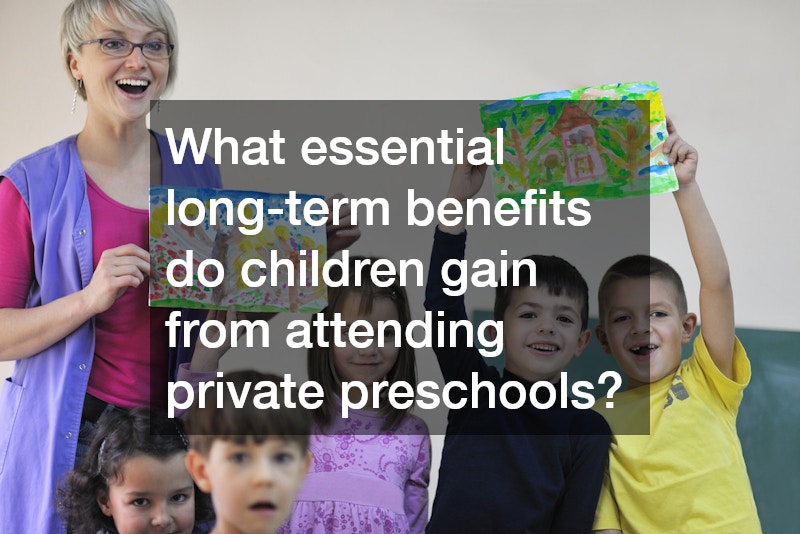
What essential long-term benefits do children gain from attending private preschools?
The long-term benefits of attending a high-caliber private preschool extend far past initial kindergarten readiness, shaping a child’s entire academic and personal trajectory. Key long-term gains include:
-
Superior School Readiness: Graduates enter primary school with advanced phonics awareness, strong early numeracy skills, and polished fine-motor coordination.
-
Sustained Academic Momentum: Early gains in reading and mathematical reasoning tend to persist throughout elementary and middle school years.
-
Stronger Executive Functioning: Children develop advanced capabilities in focus, working memory, task prioritization, and cognitive flexibility.
-
Positive Attitude Toward Learning: Early positive experiences with discovery and creative achievement instill a permanent, self-motivated love for learning.
-
Enhanced Socio-Emotional Competence: Early practice in self-regulation leads to better peer relationships, higher emotional intelligence, and effective team-building skills.
Selecting the right educational environment during a child’s formidable early years is one of the most impactful decisions a family can make. Private preschools consistently deliver an elevated learning experience by pairing low student-to-teacher ratios with specialized curricula, enrichment programs, and intentional socio-emotional support. By nurturing curiosity, critical thinking, and emotional resilience in a tailored setting, these institutions build a rock-solid foundation for future academic excellence. Investing in a high-quality private early childhood program gives young learners the tools, confidence, and enthusiasm they need to thrive in elementary school and navigate the world as lifelong learners.